BPA Claims Not True. Project Is Wrong, Wrong, Wrong: Director of Cockrell Butterfly Center

Belted Kingfisher. ©Houston Audubon Society.
June 25, 2014
On Sunday (June 22) I canoed down Buffalo Bayou with a friend, from Voss to the junction with White Oak Bayou. Seeing this transect of the bayou (which included the section slated for “restoration”) has convinced me that this project is wrong, wrong, wrong on a number of levels: aesthetically, environmentally, and financially. I have heard from proponents of the plan that the erosion in this area is “significant” and that the vegetation is “largely invasive species.” Neither of these claims are true, as far as I could see. Yes, there are areas where some erosion is taking place – but this is natural on a waterway. Property owners all along the bayou have used a variety of different means (immensely less drastic and costly than what is proposed) to shore up their banks and reduce or eliminate erosion. Certainly there were a few non-native species along the banks, but the prevailing vegetation was native vines, sycamores, box elders, and other trees and shrubs native to the area. The cliffs, which would be eliminated in the proposed reconfiguration, are important habitat for nesting kingfishers (which we saw only in this stretch of the bayou). Furthermore, the stretch that borders Memorial Park is the only part of the bayou where natural habitat (and all the animals it contains) borders the watercourse.
It was an awful shock to come out to the areas that have already been modified and “improved” = where no trees overhang the bayou, where graded, grassy slopes come down to the water’s edge, and where there is no semblance of “natural” anywhere. In these areas (from Montrose and farther east) it was hot, exposed, and little wildlife was evident. These “improved” areas were stark and ugly – a human-manipulated landscape with no shade and no wildlife.
I can only imagine the expense of carrying out the proposed “improvements” – and at what environmental cost? Seems to me the River Oaks Country Club could use some of the methods already put in place by homeowners along the bayou’s banks to shore up the areas of concern – leaving the rest alone. Taxpayers should not have to pay for this drastic plan that would have catastrophic and permanent effects on the aesthetics and environmental integrity of Buffalo Bayou along this stretch.
I thoroughly oppose the proposal and hope that you, Mayor Parker and city council members, will stand up to those trying to sell this as an improvement. It is not. Please say no to this proposed “restoration” of Buffalo Bayou.
Sincerely,
Nancy Greig, PhD
Director Cockrell Butterfly Center
[Editor’s Note: the BPA is the Bayou Preservation Association, which is promoting this project to destroy the natural beauty of this healthy, functioning stretch of Buffalo Bayou in and around our public Memorial Park.]
The BPA’s sympathetic, holistic, natural plan to destroy Buffalo Bayou
June 23, 2014
About twenty people, including City Council member Oliver Pennington, were at the monthly meeting of Super Neighborhood 22 last Thursday to hear the Bayou Preservation Association argue in favor of its bizarre plan to destroy Buffalo Bayou. The BPA and the Memorial Park Conservancy are in cahoots with the Harris County Flood Control District to do what the county has long wanted to do: strip and channelize some of the last remaining natural segments of Buffalo Bayou.

The BPA’s natural, sympathetic, holistic plan to help Buffalo Bayou be all it wants to be.
Yes, it is difficult to believe. The BPA was founded long ago to prevent this very thing from happening, and the MPC also took over the mission of Miss Ima Hogg and others to preserve and protect Memorial Park. The project they have helped create and eagerly promote would bulldoze the vegetation and trees from most of both banks along nearly 1.5 miles of the bayou as it flows past the Hogg Bird Sanctuary and Memorial Park on the north and the River Oaks Country Club golf course on the south. It would rechannel the bayou, grade the banks, plant them with Bermuda grass, destroy the scenic tributary of the Hogg Bird Sanctuary as well as the very, very old high bluff that overlooks it, and a lot more.
But it will all be done in a “holistic” way, with regret and great sympathy and understanding for what the bayou really wants to be, and also it will be gluten-free, although alas, not animal-cruelty free, as most of the creatures, including fish, beaver and otter, dragonflies and hawks, will have to sacrifice their habitat.
Sierra Club to Present Findings on County Claims of Improving Ecology of Buffalo Bayou
June 12, 2014
Is there ecological benefit to Harris County’s plan to bulldoze the wild banks of Buffalo Bayou in and around Memorial Park? Will our beautiful southern bayou be improved? Common sense says no, but the Harris County Flood Control District says yes. What is the truth?
The flood control district in its permit application (warning: big pdf file but see page 451) to the Army Corps of Engineers claims that there is “ecological lift” from their project to “restore” the bayou by stripping riparian forest and vegetation from both banks and parts of the Hogg Bird Sanctuary and digging up, filling in, and reconfiguring our 18,000-year-old bayou, one of the few natural reaches of the river remaining in the city.
The Houston Sierra Club arranged for a hydrologist and a biologist to analyze the county’s evidence outlined in the permit application that Buffalo Bayou will be improved through “ecological lift.”
On Wednesday, June 18, the public is invited by the Houston Sierra Club to a presentation on the results of its investigation into these amazing claims by the Harris County Flood Control District. There will be a visual exhibit of the project area showing the value of Buffalo Bayou as a natural resource.
The presentation will be at the United Way Community Resource Center, 50 Waugh Drive, Houston 77007.
Refreshments will be served at 6:30 p.m. The program begins at 7 p.m.

Buffalo Bayou at sunrise as it flows past Memorial Park on the left and River Oaks Country Club on the right. Photo by Frank Salzhandler.
Does this look like ecological improvement to you?
Dave Rosgen says our Buffalo Bayou is natural, functional, stable.
June 10, 2014
Listen to river guru Dave Rosgen describe the wild section of our Buffalo Bayou that Harris County wants to destroy as a “living, functional river system right here in the middle of Houston.”
The Harris County Flood Control District, Memorial Park Conservancy, and the Bayou Preservation Association all cite Rosgen in support of their bizarre, pointless plan to bulldoze the riparian forest on Buffalo Bayou in and around Memorial Park.
But here is what Rosgen himself had to say in 2009 about the health and stability of that very section of Buffalo Bayou. In this video Rosgen is standing on the bridge to the Bayou Bend Collection and Gardens looking upstream towards the area targeted for destruction by Harris County.
Watch the interview with Dave Rosgen.
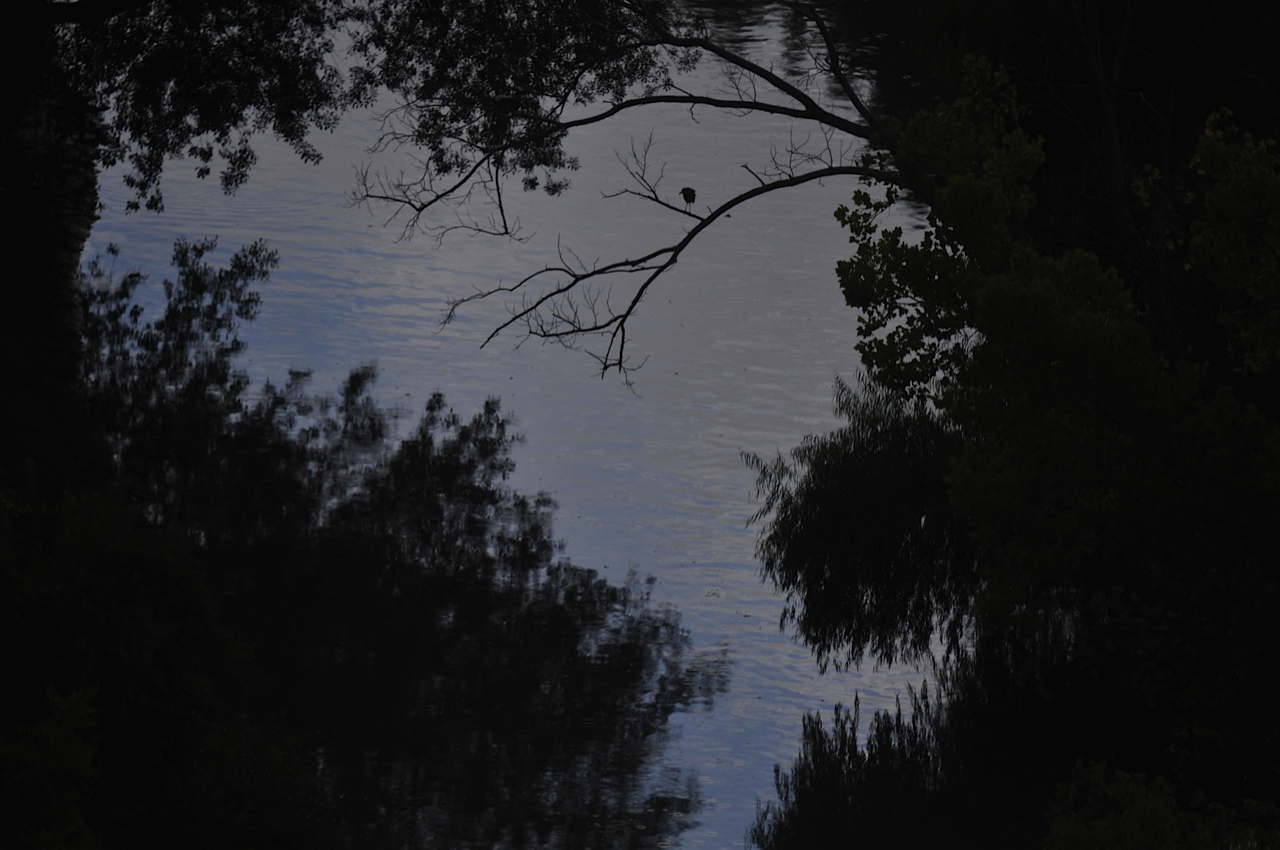
Photo by G.O. Jackson Jr.
Article in The Chronicle This Morning: Add Comments to the Chronicle, Please
Opposition to bayou erosion project grows louder
$6 million Memorial Park project would do more harm than good, opponents say
By Kiah Collier, The Houston Chronicle, May 20, 2014
A $6 million plan to tame a mile-and-a-quarter stretch of Buffalo Bayou is drawing an ever-louder outcry from several prominent environmental and conservation groups who say the project aimed at reducing erosion and improving water quality would only make things worse.
Opposition to the so-called Memorial Park Demonstration Project, targeting a segment of the historic bayou that snakes between Memorial Park’s secluded southern edge and the River Oaks Country Club golf course, has grown more vocal as a deadline to submit feedback to the U.S. Army Corps of Engineers approaches. The project requires a permit from the Corps.
The agency on Thursday announced it would extend the public comment period by 30 days, until June 30, citing “the complexity of the project studies and stream restoration techniques.”
Borne of a 2010 workshop hosted by the Bayou Preservation Association, the project calls for reshaping the banks of the bayou that wind past the posh country club, the Hogg Bird Sanctuary, a residential neighborhood and the southernmost border of the 1,503-acre park.
The plan calls for the segment of Buffalo Bayou – stressed, both sides agree, by the increased runoff that has come with urban development – to be widened, its course adjusted in some places and its crumbling banks shaped into stable slopes. A mass of vegetation would be stripped away from its banks and trees removed. Replanting would occur toward the end of the project, the cost of which Harris County, the city of Houston and the country club have agreed to share.
…
“If we strip off 80 percent of the vegetation, if we remove the trees that shade the water, we will actually ruin a mile and a quarter of the main channel of Buffalo Bayou,” said Evelyn Merz, conservation chair of the Lone Star Chapter of the Sierra Club.
The group is proposing an alternative that involves promoting the existing habitat by planting native vegetation. It would impact the area less “because it will be aimed at the areas that most need support,” Merz said.
….
Anne Olson, president of the Buffalo Bayou Partnership, which oversees the waterway from Shepherd Drive east to the Turning Basin Terminal, said the proposed project will reduce the amount of sediment that ends up on hike-and-bike trails farther east.
“What happens for us downstream is that the silt that sloughs off the banks in Memorial Park ends up down on our trails, and it’s a huge maintenance issue for us, so anything that can be done to alleviate the erosion of those banks is an important thing,” Olson said.
Defense Team on KPFT Tuesday, May 20, 3-4 p.m.
May 19, 2014
Members of the Save Buffalo Bayou defensive team will be on the Eco-Ology radio show on KPFT Tuesday, May 20, from 3 to 4 p.m. Listen to Olive Hershey, Brandt Mannchen, and Frank Salzhandler talk about why bulldozing the riparian forest on both banks of Buffalo Bayou as it flows through our historic Memorial Park and the Hogg Bird Sanctuary is an appalling idea.
Hershey is a poet, novelist, and environmental activist. Mannchen is a biologist and chair of the Forestry Committee of the Houston Sierra Club. Salzhandler is a former All-American UT swimmer, rabble rouser, director of the Endangered Species Media Project and chair of the Natural Heritage Program for the Harris County Historical Commission.
Houston Chronicle Outlook Editorial: Plan Could Ruin Buffalo Bayou
Invasive Erosion Control Plan Could Destroy Buffalo Bayou
Memorial Park plan would reduce unique waterway to a ditch
Reprinted from The Houston Chronicle.
By Olive Hershey and Frank Salzhandler, Houston Chronicle OUTLOOK, May 18, 2014 Section B
A Harris County plan to alter Buffalo Bayou as it runs through our publicly owned Memorial Park would destroy one of the last remaining river forests in Houston, an ecologically important riparian wilderness that cannot be replaced.
The county intends to bulldoze both sides of the bayou – up to 100 feet from the water’s edge in places and including a tributary in the Hogg Bird Sanctuary – stripping wide swathes of native trees, vines and undergrowth from the bayou’s natural sandy banks.
Vital habitat for hundreds of species of birds, animals and water creatures will be lost. The slow-moving bayou’s shady banks will be denuded and replanted as a sun-baked lawn.
This is their plan for Buffalo Bayou.
May 7, 2014
Tell the Army Corps of Engineers you oppose the proposal to bulldoze the natural ecosystem of our last urban wilderness. You have only until June 30 to tell the government it’s better to restore the native habitat than to destroy it.
Restore. Don’t destroy.
A riparian forest cannot be replaced.
Join us to learn more at a public meeting of concerned citizens on May 22 at St. Stephen’s Community Hall, 1805 W. Alabama, beginning at 6:30 p.m.
Images of Buffalo Bayou Now.
-

- Great blue heron tracks in the mud on Buffalo Bayou. Photo by Jim Olive

-

- Photo by Jim Olive

-

- Buffalo Bayou riparian forest. Photo by Jim Olive.
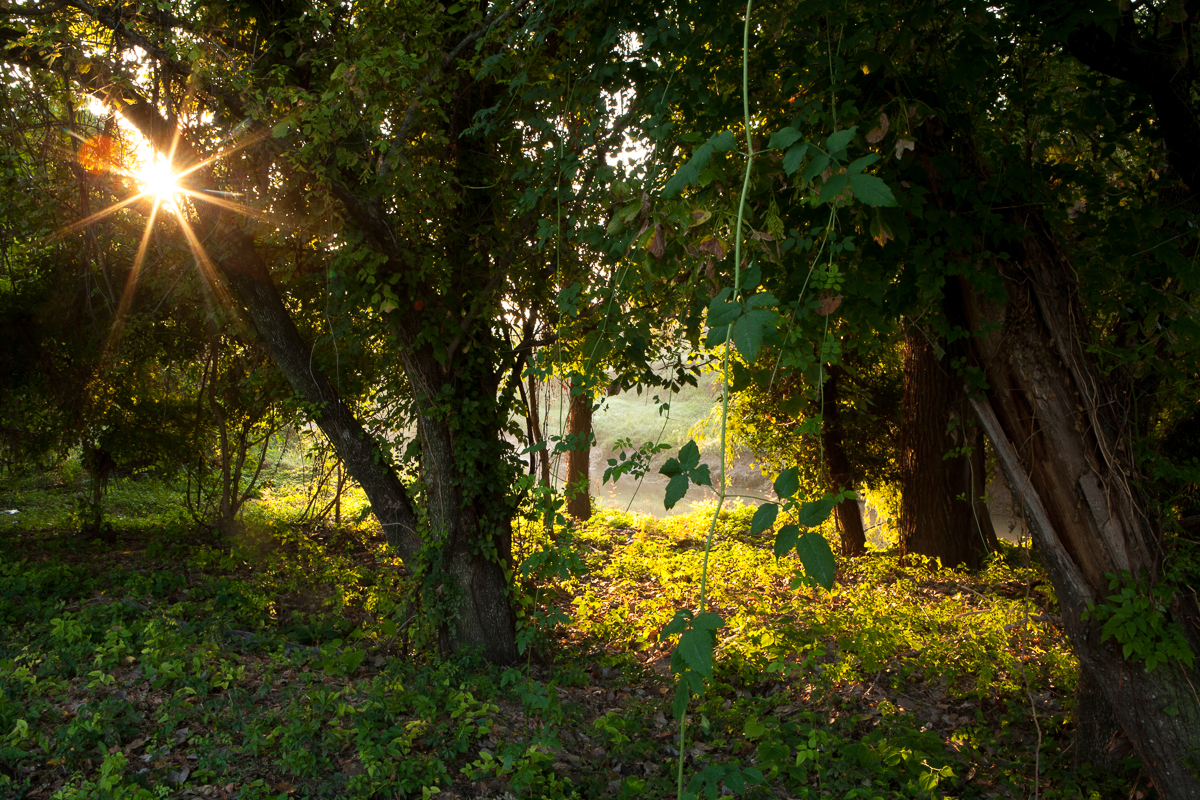
-

- Photo by Jim Olive

-

- Photo by G.O. Jackson Jr.
And this is what they want Buffalo Bayou to look like when they are done scraping it bare, stripping the native habitat, and planting it with grass.

A photo of Cypress Creek after “restoration” by the Harris County Flood Control District.

Recent Comments