Article in The Chronicle This Morning: Add Comments to the Chronicle, Please
Opposition to bayou erosion project grows louder
$6 million Memorial Park project would do more harm than good, opponents say
By Kiah Collier, The Houston Chronicle, May 20, 2014
A $6 million plan to tame a mile-and-a-quarter stretch of Buffalo Bayou is drawing an ever-louder outcry from several prominent environmental and conservation groups who say the project aimed at reducing erosion and improving water quality would only make things worse.
Opposition to the so-called Memorial Park Demonstration Project, targeting a segment of the historic bayou that snakes between Memorial Park’s secluded southern edge and the River Oaks Country Club golf course, has grown more vocal as a deadline to submit feedback to the U.S. Army Corps of Engineers approaches. The project requires a permit from the Corps.
The agency on Thursday announced it would extend the public comment period by 30 days, until June 30, citing “the complexity of the project studies and stream restoration techniques.”
Borne of a 2010 workshop hosted by the Bayou Preservation Association, the project calls for reshaping the banks of the bayou that wind past the posh country club, the Hogg Bird Sanctuary, a residential neighborhood and the southernmost border of the 1,503-acre park.
The plan calls for the segment of Buffalo Bayou – stressed, both sides agree, by the increased runoff that has come with urban development – to be widened, its course adjusted in some places and its crumbling banks shaped into stable slopes. A mass of vegetation would be stripped away from its banks and trees removed. Replanting would occur toward the end of the project, the cost of which Harris County, the city of Houston and the country club have agreed to share.
…
“If we strip off 80 percent of the vegetation, if we remove the trees that shade the water, we will actually ruin a mile and a quarter of the main channel of Buffalo Bayou,” said Evelyn Merz, conservation chair of the Lone Star Chapter of the Sierra Club.
The group is proposing an alternative that involves promoting the existing habitat by planting native vegetation. It would impact the area less “because it will be aimed at the areas that most need support,” Merz said.
….
Anne Olson, president of the Buffalo Bayou Partnership, which oversees the waterway from Shepherd Drive east to the Turning Basin Terminal, said the proposed project will reduce the amount of sediment that ends up on hike-and-bike trails farther east.
“What happens for us downstream is that the silt that sloughs off the banks in Memorial Park ends up down on our trails, and it’s a huge maintenance issue for us, so anything that can be done to alleviate the erosion of those banks is an important thing,” Olson said.
Defense Team on KPFT Tuesday, May 20, 3-4 p.m.
May 19, 2014
Members of the Save Buffalo Bayou defensive team will be on the Eco-Ology radio show on KPFT Tuesday, May 20, from 3 to 4 p.m. Listen to Olive Hershey, Brandt Mannchen, and Frank Salzhandler talk about why bulldozing the riparian forest on both banks of Buffalo Bayou as it flows through our historic Memorial Park and the Hogg Bird Sanctuary is an appalling idea.
Hershey is a poet, novelist, and environmental activist. Mannchen is a biologist and chair of the Forestry Committee of the Houston Sierra Club. Salzhandler is a former All-American UT swimmer, rabble rouser, director of the Endangered Species Media Project and chair of the Natural Heritage Program for the Harris County Historical Commission.
Houston Chronicle Outlook Editorial: Plan Could Ruin Buffalo Bayou
Invasive Erosion Control Plan Could Destroy Buffalo Bayou
Memorial Park plan would reduce unique waterway to a ditch
Reprinted from The Houston Chronicle.
By Olive Hershey and Frank Salzhandler, Houston Chronicle OUTLOOK, May 18, 2014 Section B
A Harris County plan to alter Buffalo Bayou as it runs through our publicly owned Memorial Park would destroy one of the last remaining river forests in Houston, an ecologically important riparian wilderness that cannot be replaced.
The county intends to bulldoze both sides of the bayou – up to 100 feet from the water’s edge in places and including a tributary in the Hogg Bird Sanctuary – stripping wide swathes of native trees, vines and undergrowth from the bayou’s natural sandy banks.
Vital habitat for hundreds of species of birds, animals and water creatures will be lost. The slow-moving bayou’s shady banks will be denuded and replanted as a sun-baked lawn.
This is their plan for Buffalo Bayou.

May 7, 2014
Tell the Army Corps of Engineers you oppose the proposal to bulldoze the natural ecosystem of our last urban wilderness. You have only until June 30 to tell the government it’s better to restore the native habitat than to destroy it.
Restore. Don’t destroy.
A riparian forest cannot be replaced.
Join us to learn more at a public meeting of concerned citizens on May 22 at St. Stephen’s Community Hall, 1805 W. Alabama, beginning at 6:30 p.m.
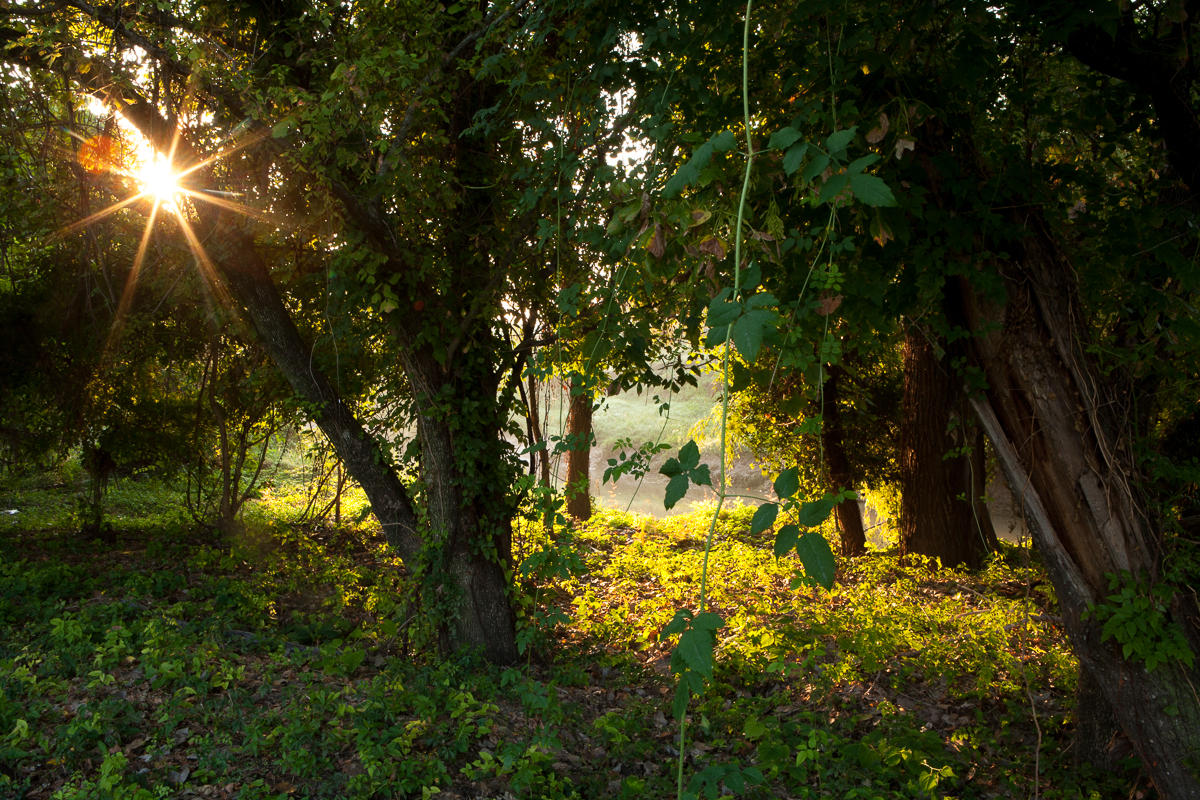
Images of Buffalo Bayou Now.
-

- Great blue heron tracks in the mud on Buffalo Bayou. Photo by Jim Olive

-

- Photo by Jim Olive

-

- Buffalo Bayou riparian forest. Photo by Jim Olive.
-

- Photo by Jim Olive

-

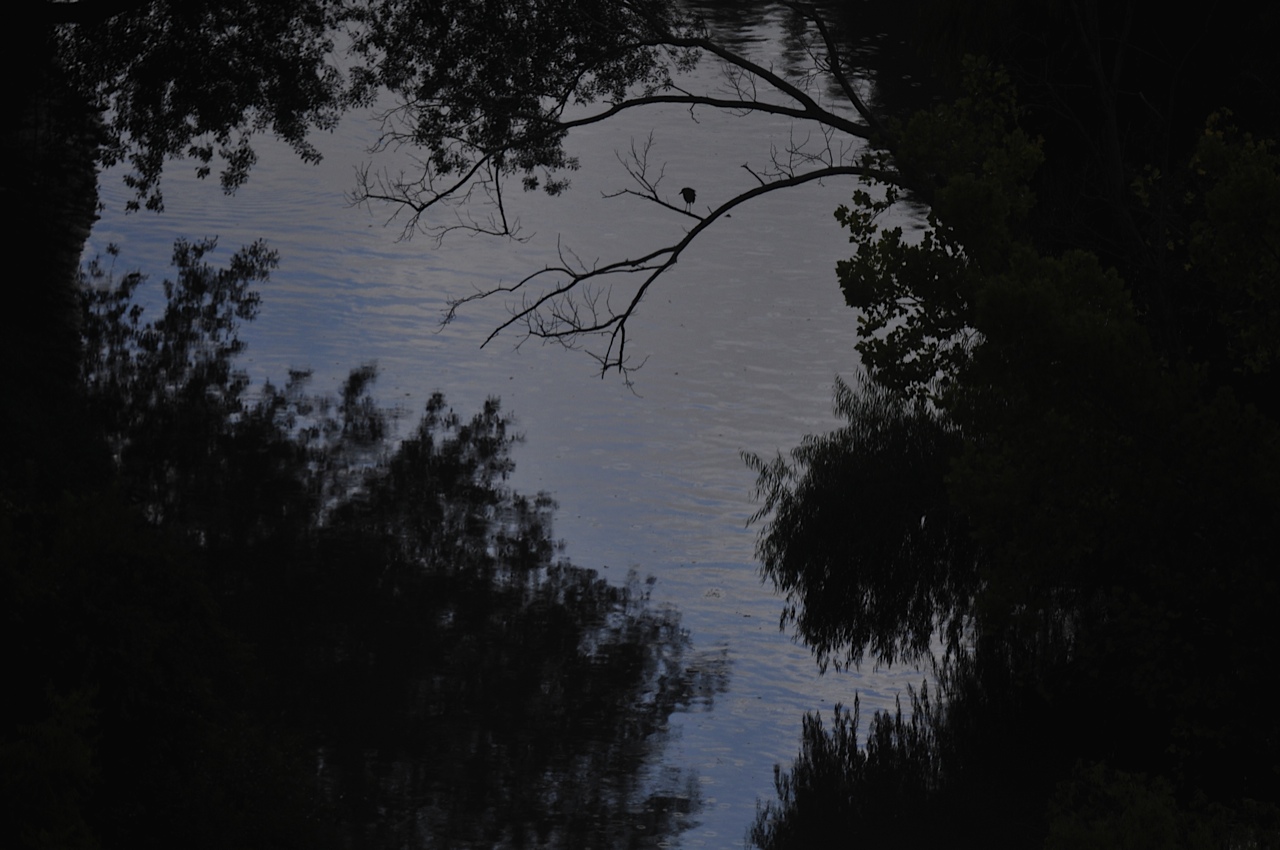
- Photo by G.O. Jackson Jr.
And this is what they want Buffalo Bayou to look like when they are done scraping it bare, stripping the native habitat, and planting it with grass.

A photo of Cypress Creek after “restoration” by the Harris County Flood Control District.

Recent Comments